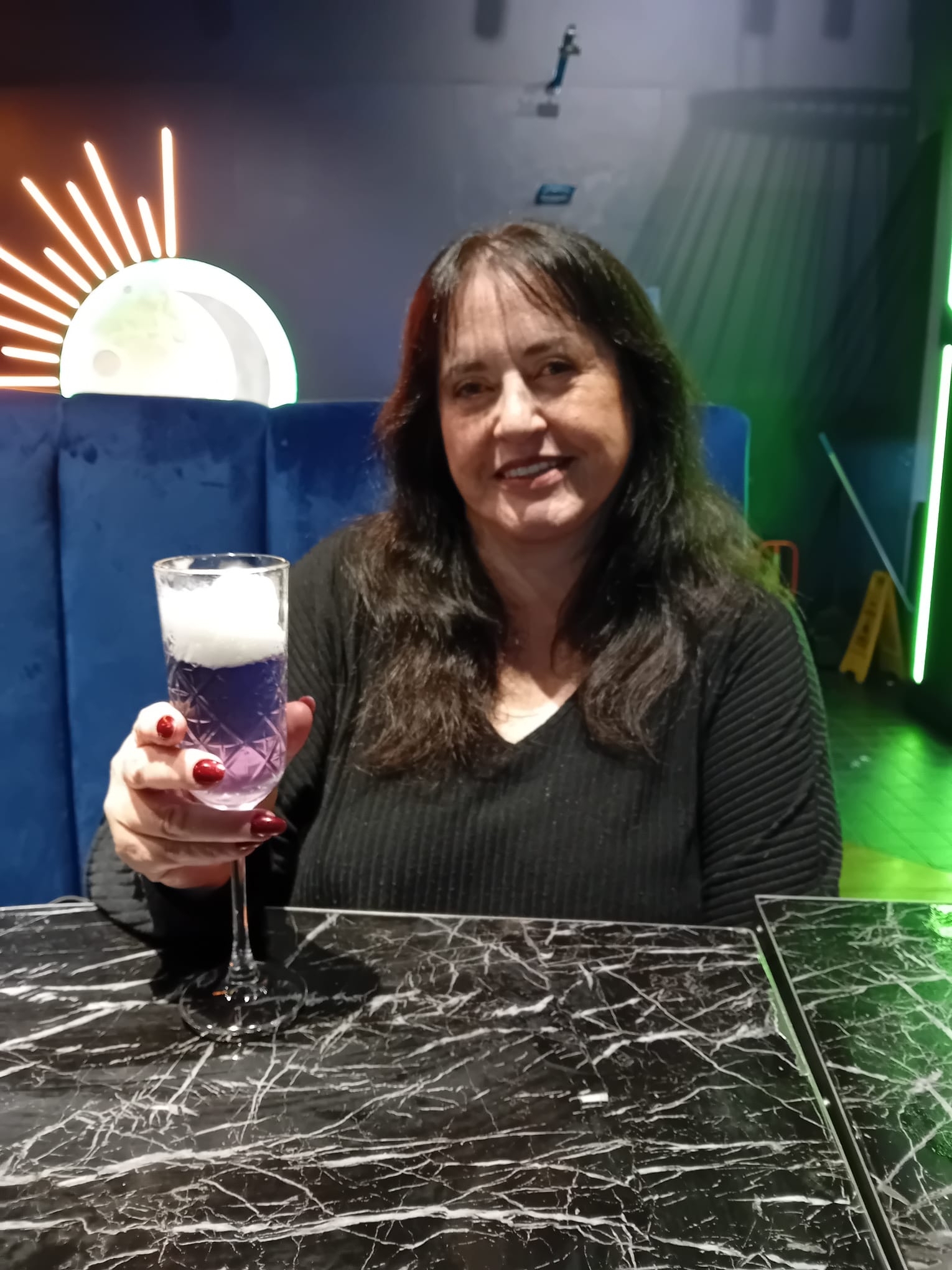
For years, Lucy carried a secret that nobody knew.
To the outside world she was an ordinary wife, mother and administrator. She loved her family, worked hard and quietly got on with life.
Behind closed doors, however, she was drowning.
Like so many parents, everything revolved around her children. One of her sons is autistic and, after exhausting every option, Lucy and her husband made the difficult decision to send him to the only school they believed could truly support him.
It changed his life.
Today he has both a degree and a master’s qualification.
But giving him that opportunity came at an enormous financial cost.
“We weren’t living extravagantly,” Lucy tells me. “We lived frugally. But the debts just kept growing until I couldn’t even make the minimum payments. I genuinely couldn’t see a way out.”
That feeling of desperation eventually led her to make a decision she has regretted every day since.
She committed benefit fraud.
Not for a luxury lifestyle.
Not for designer handbags or expensive holidays.
But because she believed she was running out of options.
“I hated every single day of it,” she admits. “People probably imagine someone enjoying getting away with it. It wasn’t like that at all. Every morning I’d wake up terrified that today would be the day I’d be caught.”
For almost eight years she lived with that fear.
Then one morning, twenty police officers arrived at her front door.
“It sounds strange,” she says, “but there was relief as well as fear. It was finally over.”
The Long Wait
Most people imagine an arrest is quickly followed by a court appearance.
In reality, Lucy spent more than two years waiting.
Two years wondering whether she would go to prison.
Two years trying to prepare her family for every possible outcome.
Her solicitor never made promises.
When she repeatedly asked if she would be imprisoned, his answer remained the same.
“Fifty-fifty… and probably the wrong side of fifty.”
Looking back, she believes that honesty was one of the greatest kindnesses anyone showed her.
“I met women in prison whose solicitors had told them they definitely wouldn’t be sent down. They turned up with nothing. Cars still in the court car park. Children expecting them home from school. They weren’t prepared at all.”
Lucy was.
And when the judge sentenced her to 30 months in prison, she walked straight from the courtroom into custody.
Life Behind Bars
Television dramas paint prison as a place filled with constant violence and intimidation.
Lucy’s experience surprised even her.
“There was bullying sometimes,” she says, “but mostly there was kindness.”
Women shared coffee.
Checked on one another.
Knocked on doors if someone missed dinner.
“If someone was having a bad day, people noticed.”
One woman she barely knew quietly brought food to her cell after realising Lucy hadn’t eaten.
“She just said, ‘If you want to talk, I’m here.'”
It wasn’t what she expected.
Neither was discovering she was living alongside women convicted of murder, terrorism, drug offences, fraud and modern slavery.
“You quickly stop judging people by what they’re inside for,” she says. “You just see people.”
Perhaps the hardest moment came after she lost the chance to spend Christmas at home with her family.
Having earned trusted status, she had been saving her release days for Christmas.
Then prison officers discovered she’d smuggled back an iPod so she could listen to music quietly in bed.
Her punishment?
A week in solitary.
She lost Christmas with her family.
“I don’t think I ate or drank properly for five days.”
Freedom Isn’t Always Freedom
Lucy served eleven months before being released on licence.
She thought the hardest part was over.
In many ways, it was only just beginning.
Finding employment with a criminal conviction proved harder than prison itself.
She attended interviews.
Received job offers.
Had offers withdrawn weeks later after employers reconsidered.
“You start to feel like you’re serving a life sentence.”
Eventually she discovered Working Chance, a charity supporting women with criminal convictions into employment.
As well as practical advice, they gave her something she desperately needed.
Hope.
“They made me feel like somebody had my back.”
Today Lucy works full-time for Mencap as a Governance Administrator.
The organisation carried out a DBS check.
She explained everything before they found it themselves.
Their CEO made a decision Lucy will never forget.
“She simply said people deserve a second chance.”
The Punishment That Never Ends
One thing struck me throughout our conversation.
Lucy never once tried to excuse what she’d done.
She accepted responsibility.
She repaid every penny.
She paid court costs.
She served her sentence.
What hurts most isn’t prison.
It’s knowing that years later, the conviction still follows her into interviews, applications and opportunities.
“Inside prison,” she says, “people often say it doesn’t matter how long your sentence is. The real sentence is for life.”
It made me stop and think.
Our justice system is designed to punish wrongdoing.
But if someone accepts responsibility, serves their sentence, rebuilds their life and becomes a productive member of society…
At what point do we allow them to move forward?
None of us are defined by the worst decision we’ve ever made.
Or at least, perhaps we shouldn’t be.
Lucy’s story isn’t really about prison.
It’s about what happens afterwards.
It’s about redemption.
It’s about rebuilding.
And perhaps, most importantly, it’s about remembering that behind every headline is a human being whose story is almost always more complicated than we first imagine.
Sometimes the greatest act of justice isn’t punishment.
It’s allowing someone the chance to become who they choose to be next.
If you have a criminal conviction and need support finding employment, organisations such as Working Chance exist to help women rebuild their careers and confidence after the justice system.