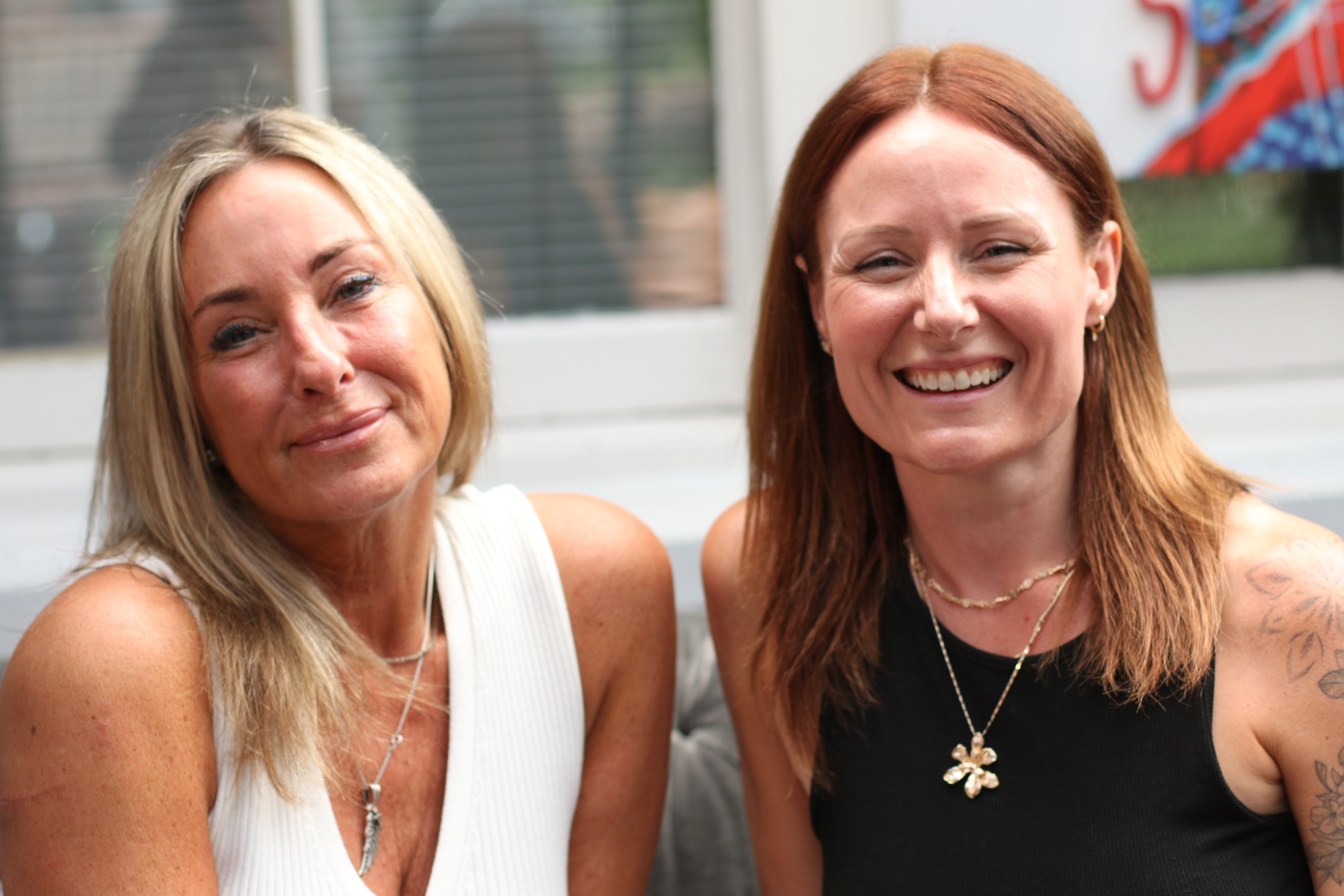
They spent years working in the secret world of covert policing, investigating corruption from an office most of their colleagues didn’t even know existed.
Today, Sam and Emma are private investigators, business partners and mums, using those same extraordinary skills to find missing people, uncover affairs and give clients something they often desperately need: the truth.
There are school-run stories.
And then there are Sam’s school-run stories.
One afternoon, Sam had promised her children she would pick them up from school. There was just one problem: a call had come in from her business partner, Emma.
A 13-year-old boy the police had been trying to locate for weeks was still missing.
His worried family had engaged their private investigation company after attempts to find him had so far failed, and new information meant somebody needed to get to London.
Sam went.
The plan was to carry out some quick surveillance and still make it back in time for the school run.
Simple.
Or at least as simple as anything appears to be in the world of private investigation.
Then Sam needed the toilet.
Desperately.
She drove away from the location and found a Costa miles away.
There was somebody already in the toilet, so she waited.
And then she turned around.
Sitting there was the missing boy.
“I was nowhere near where I should have been,” she remembers.
What followed sounds like a scene written for television.
Sam discreetly took a photograph. The boy and the older girl he was with left the café. Sam followed on foot as they crossed a busy junction and boarded a bus.
Her car was too far away.
So she did what perhaps only a former police officer would think to do.
She flagged down a passing police car and jumped into the back.
“I said, ‘I’m not mental. Please, just read this incident. There’s a high-risk missing person on that bus.’”
The officers checked.
They followed the bus.
The boy was safely recovered and returned to his family.
And Sam?
She made it back for the school run.
“I just screeched up to the school. The kids came out and asked, ‘Have you had a nice day?’
“I was like, ‘Yeah. Just normal. Just a boring day.’”
Welcome to the world of two of the most fascinating women I’ve interviewed for The Female Boss.
From Secret Police Unit to Private Investigation
Sam and Emma didn’t meet as fresh-faced police recruits dreaming of one day launching a business together.
Their paths crossed much later.
Both had built substantial careers in policing, Sam serving for around 27 years and Emma for 16 and both had gravitated towards the less visible side of police work.
They liked intelligence.
Surveillance.
Undercover work.
Or, as Emma puts it rather more simply, “all the sneaking around.”
Eventually, their careers brought them together in an anti-corruption intelligence unit.
Think Line of Duty.
Except even more secret.
The unit operated from a tiny, highly secure office. Very few people knew it existed. Sam and Emma could be investigating a fellow police officer, know extraordinary detail about that person’s movements and communications, and then pass them in a corridor without giving the slightest indication that they knew anything at all.
“We would know exactly who they were,” Emma explains. “We’d have their photo and everything, and we’d see them down the corridor. We would know everything about them, even what they ate for breakfast.”
“They wouldn’t have a clue that we’d been watching them,” Sam adds.
Holding your nerve is rather important when your job requires you to know almost everything about somebody who doesn’t even know you exist.
For Sam, the adrenaline was part of the appeal.
Her first area of specialist police work had been surveillance. She was the only woman alongside around 16 or 17 men in the force surveillance unit and spent seven years becoming highly trained in following people without being detected.
She still remembers one of her earliest assignments, being sent into a record shop to stand close to the person being watched.
Her heart was pounding so hard she was convinced he must be able to hear it.
He couldn’t.
That is the skill.
Look ordinary, blend in.
Never disturb the environment.
And never let the person you are watching know you are there.
By the time Sam and Emma worked together in anti-corruption, those skills were second nature.
Their job was not about turning against the police. Quite the opposite.
“No one likes corruption,” Sam says.
For every officer who might be feeding information to the wrong people or behaving inappropriately, there were good officers working incredibly hard whose investigations could be undermined by that behaviour.
Good policing depended on rooting it out.
And while television might have us believe anti-corruption departments spend every day uncovering vast criminal conspiracies, Emma is quick to point out that their experience was rather more nuanced. Serious issues existed, but plenty of what crossed their desks involved misconduct, poor decisions or, in Sam’s words, sometimes plain “stupidity”.
The work nevertheless required discretion, judgment and the ability to gather evidence without being noticed.
Skills that would later become the foundations of their own business.
Motherhood Changed the Uniform – Not the Investigators
Eventually both women became mothers.
Sam had spent years working in child protection while also experiencing her own struggle to have children and going through IVF. The emotional weight of the work was becoming increasingly difficult.
Emma also became pregnant, and ultimately both women left policing.
Between them, they were walking away from more than four decades of experience.
But they didn’t walk away from each other.
They stayed friends.
They met with the children.
And as those children got older and school beckoned, another practical question arrived.
What next?
“We needed to think about earning an income,” Emma says.
They experimented with small jobs, including mystery shopping, but needed more income and inevitably kept finding themselves drawn back towards the covert world.
Then Sam watched a programme featuring private investigators revisiting a cold case.
Something clicked.
They were already investigators.
They already understood surveillance.
They already knew how to gather intelligence and evidence.
Why not become private investigators?
There was only one slight issue.
“We really didn’t have a clue at first,” Emma laughs.
They began networking and discovered an industry far larger than either of them had realised.
Thousands of people were working within private investigation.
You simply never heard about them.
Which, when you think about it, is probably a good sign.
They initially carried out surveillance work for other private investigation companies.
And they were good at it.
Very good.
Being women sometimes gave them an advantage too.
The stereotypical image of a private investigator still involves a man lurking suspiciously in a car.
Sam and Emma could blend into environments differently.
Hair up, Hair down.
Hat.
Glasses.
Different clothes.
Two women having lunch in a restaurant.
Nobody notices.
And that is precisely the point.
But while working for other companies, they noticed something they didn’t like.
The surveillance might be covert.
The customer service sometimes seemed to be missing entirely.
Clients were paying substantial amounts of money while receiving poor communication and, in some cases, being treated without the sensitivity their situations deserved.
Sam and Emma looked at each other and came to a conclusion familiar to many female founders.
We can do this better.
So they did.
A Softer Approach to a Very Serious Business
Today, their agency undertakes a mixture of work.
Corporate investigations.
Insurance cases.
Missing persons.
Surveillance where evidence is needed to establish whether somebody’s claims match what they are actually doing.
But one particular area has become a significant part of their reputation.
Infidelity.
It wasn’t necessarily the niche they set out to dominate, but they have become recognised as industry experts in affair investigations.
And this is where the reality of private investigation becomes far removed from the slightly salacious image of catching somebody sneaking out of a hotel.
Because by the time many clients reach Sam and Emma, they are in pieces.
Most are ordinary people.
Not celebrities.
Not millionaires.
People who have spent months, sometimes years knowing something feels wrong.
A partner is behaving differently.
Stories don’t add up.
There are unexplained absences.
Phones become guarded.
Instinct is screaming at them that something has changed.
But they can’t prove it.
Worse, some are repeatedly told they are imagining it.
They are paranoid.
They are jealous.
They are “crazy”.
Some are already in therapy by the time they make the call.
“What we offer people is peace of mind,” Sam explains.
“They go to bed every night with that turmoil. When they come to us, eventually it’s like an outpouring.
“What we do very quickly is get them black-and-white evidence of whether what they are thinking is actually happening.”
“Or we prove it’s not.”
“But what we’re giving somebody is peace of mind, and that’s priceless.”
That distinction matters.
Their job isn’t to prove somebody is cheating.
Their job is to establish the truth.
Sometimes the answer will be the one a client feared.
Sometimes it won’t.
Either way, uncertainty is replaced with knowledge.
And their motto sums up the entire philosophy:
Knowledge is power.
“You’ve Saved My Life”
One case has stayed particularly strongly with both women.
A Muslim woman approached them after previously engaging another investigator without getting the evidence she needed.
She was married with children and utterly desperate.
She believed her husband was having an affair.
But this wasn’t simply a question of whether she should end her marriage.
The potential consequences stretched into her family and community.
According to what she told Sam and Emma, she had been made to understand that leaving the marriage without proof could mean losing the support around her.
Her husband, meanwhile, was telling people she was imagining what was happening.
She felt trapped.
Sam and Emma began investigating.
Eventually their surveillance placed the husband at a hotel.
They watched.
Waited.
And then a woman arrived.
There was a kiss.
An embrace.
Evidence.
The pair went upstairs to a hotel room.
This time there was no ambiguity.
Sam and Emma contacted their client.
They had what she had been looking for.
The woman made a decision.
She wanted to go there.
Accompanied by her sister, she travelled to the hotel while the investigators maintained the operation.
What happened next provided the proof she felt she needed.
Her husband opened the hotel-room door.
The other woman was inside.
The marriage ultimately ended.
But the woman’s family supported her and her children.
Later she told Sam and Emma:
“You’ve saved my life.”
It is a sentence that strips away every cliché about private investigators.
Because this wasn’t about enjoying somebody else being caught.
It was about a woman who felt she had lost control of her own reality being given information that allowed her to make decisions about her life.
Emma sums it up perfectly.
“It’s all about empowering people, whether it’s men or women. It’s about giving them that power.
“A lot of the time, they’re made to feel crazy for years.”
The evidence changes that.
Private Investigators – And Mums
There is another side to Sam and Emma that makes their story so compelling.
For all the covert cameras, trackers, surveillance operations and extraordinary situations, ordinary life carries on around them.
Children still need collecting from school.
Family life still happens.
Sam’s missing-person story is perhaps the perfect example.
One minute you are following a high-risk missing 13-year-old across London and commandeering assistance from a passing police car.
The next you are outside school asking what everybody wants for tea.
That grounding influences the way they work too.
They understand risk.
They know the law.
And despite having decades of specialist experience between them, they aren’t interested in playing action heroes.
In a missing-person case, for example, their job is to locate, observe, document and work with the police, not confront somebody and potentially put themselves or others in danger.
“We’re mums,” Sam says simply.
That combination of courage and common sense runs through the business.
They know what they are capable of.
And they know where the boundaries are.
The Women You Would Never Notice
These days, Sam and Emma have a trusted team carrying out much of their surveillance work.
But don’t assume that means they are permanently behind desks.
Emma has still found herself under a car at three o’clock in the morning when a job needed doing.
Sam admits she still occasionally gets involved too.
And put them in the right Mayfair restaurant and you might never know they were working at all.
That is what fascinates me most about surveillance.
The best private investigator isn’t necessarily the person hiding behind a newspaper.
It’s the woman sitting two tables away apparently taking a selfie.
The friend having dinner.
The person drinking coffee.
Someone so completely ordinary in the environment that your eyes simply pass over them.
“You are just blending in as a normal person dining in a restaurant,” Emma explains.
Except there may be a covert camera sitting on the table disguised as an everyday object.
“The whole purpose of surveillance is that people don’t know what you’re doing.”
Sam puts it another way:
“Don’t disturb the environment.”
Perhaps that is why these two women are so good at what they do.
They know when not to be noticed.
Changing the Face of Private Investigation
Ironically, after careers built around not being seen, Sam and Emma are now increasingly stepping into the spotlight.
They have appeared on television, shared their experiences publicly and are involved in a television project inspired by their world, although the production process has taken rather longer than two women accustomed to police timescales find entirely comfortable.
They want to continue growing the agency and becoming better known, but without turning themselves into something they aren’t.
They know that the traditional corporate image of private investigation may appeal to certain clients.
But they also know what makes their business different.
They are prepared to show their faces.
To talk.
To listen.
To care.
They bring the credibility of decades in policing, an understanding of the law and the investigative skills to obtain evidence properly.
But alongside that is something less technical and equally important.
Empathy.
“We bring a much softer approach to the industry,” Sam says.
“We’re ethical. We’re empaths. We have a lot to offer.”
And perhaps that is the real Female Boss story here.
Two women left established careers after becoming mothers.
They didn’t abandon the skills they’d spent decades acquiring.
They repurposed them.
They spotted an industry where they believed clients deserved better.
And rather than simply complain about it, they built the alternative.
Not by copying the traditional image of what a private investigator was supposed to look like.
By doing it their way.
Highly skilled.
Highly trained.
Professional.
Discreet.
Female.
And human.
When somebody contacts them in turmoil, Sam and Emma cannot promise the answer will be the one that person wants.
But they can help replace suspicion with evidence.
Confusion with clarity.
Fear with choice.
Because whether it is a missing child, an insurance investigation, a corporate case or somebody lying awake at night wondering if the person beside them is telling the truth, their philosophy remains the same.
Knowledge is power.
And sometimes knowing the truth is the first step towards taking your life back.
Get in touch here – Private Detectives: Professional UK-Wide Investigative Services